Anúncios
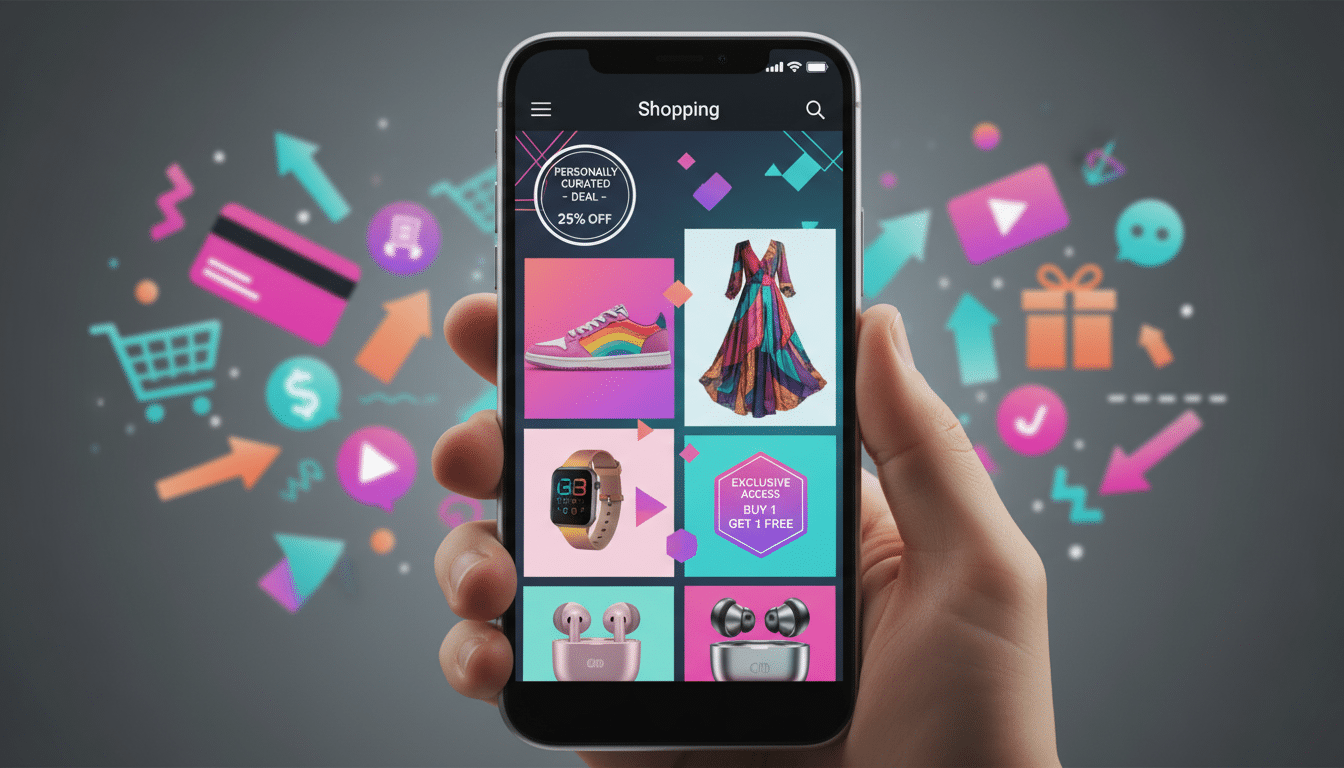
Recommendations in shopping apps are short, timely picks users see in feeds, product pages, emails, and push alerts. They also show up in in-app carousels. These personalized suggestions help shoppers discover pieces, complete looks, or request quick ideas. These picks balance business goals like engagement, conversion, and retention.
The recommendation system in an app combines data about people and products. A user profile captures behavioral signals and simple demographics. An item refers to a product or SKU. Interactions include views, add-to-cart actions, purchases, likes, and shares.
Anúncios
Context, including time of day, device, or current session, shapes which app suggestions make sense in the moment.
This article explains how ecommerce algorithm choices drive what each person sees. Expect clear, plain-language explanations of core ideas and trade-offs. These include relevance versus novelty and privacy concerns.
The tone stays friendly and direct. There are no promises of guaranteed results—only practical insights. It shows how personalized suggestions are built and why they matter for shopping apps.
Key Takeaways
- Recommendations appear across app touchpoints to aid discovery and convenience.
- A recommendation system uses user profiles, item data, interactions, and context.
- App suggestions balance business goals and real user needs like inspiration.
- Ecommerce algorithm choices shape relevance, novelty, and privacy trade-offs.
- The article will break down technical ideas in simple, fashion-friendly terms.
How recommendation systems work in apps
The backbone of app suggestions is a mix of simple building blocks and smart engineering. A modern recommendation system learns from what users do and what items look like.
It also tracks how these user-item interactions change over time.
Basic concepts: users, items, and interactions
Users are profiles plus session signals and past purchases. Apps track saved looks, tried sizes, and repeat visits to build a clear profile.
Items have attributes like brand, color, size, price, and images. These tags help match products to shoppers’ tastes.
Interactions are the strongest signals. Clicks, views, saves, and purchases show user preferences clearly.
When someone saves a look, the system updates how relevant it sees the item.
Types of data apps collect for suggestions
Apps gather many signals to make good suggestions.
- Explicit signals: ratings, wishlist additions, direct feedback.
- Implicit signals: dwell time, scroll depth, repeat visits.
- Contextual data: device type, time of day, and location when permitted.
- Content metadata: descriptions, categories, tags, and product images.
- Social signals: likes, follows, and shares within the app.
Privacy matters a lot. Many teams use minimal personal data and hashed identifiers to protect users.
This lets apps use behavior data without risking privacy.
Real-time vs. batch processing for recommendations
Engineers choose batch or real-time based on trade-offs. Batch retrains models on a schedule. This suits heavy matrix factorization and offline testing.
Real-time updates suggestions during a session. Streaming clicks or cart changes help show fresh, session-aware ideas quickly.
Many apps use hybrid systems. Batch provides stable models, while real-time adds freshness and personalization without high costs or delays.
Recommendations
Smart product suggestions shape the app experience. Good recommendations speed discovery and cut browsing time. They also nudge users toward items they will like.
For fashion apps, recommendations mean matching styles, pairing complementary pieces, and showing new arrivals in a friendly way.
Why recommendations matter for engagement
Relevant picks keep users tapping and scrolling longer. More engagement often leads to higher order values. Brands like ASOS and Zara see clear uplift when suggestions feel personal and timely.
Personalization metrics: CTR, conversion rate, retention
Measurement is simple to list but tricky to balance. Click-through rate (CTR) shows attention. Conversion rate reveals sales impact.
Retention and repeat purchases measure lasting value. Add-to-cart rate shows user consideration. Time to purchase reveals friction.
Revenue per user connects recommendations to business results. Teams should avoid focusing on one metric alone. A balanced dashboard uses short-term and long-term signals.
This helps guide the tuning of the ecommerce algorithm effectively.
Balancing novelty and relevance in suggested items
Pushing only familiar choices raises immediate CTR but limits discovery. Offering only new items risks lower immediate conversions.
- Blend top-performing, familiar picks with some fresh suggestions.
- Use exploration-exploitation methods to test new items without hurting performance.
- Leverage context like season or trends to offer novel but fitting options.
Good systems keep the mix dynamic and monitor personalization metrics. They adjust app suggestions so users feel both understood and curious.
Common algorithms behind ecommerce algorithm recommendations
The core ideas behind a recommendation system shape what a shopper sees in an app. Simple rules can suggest trending items, while layered models create more personal picks.
Below are the main algorithm families used for fashion and retail suggestions.
Collaborative filtering: user-based and item-based methods
Collaborative filtering looks at patterns across users and items to suggest new products. A user-based approach finds shoppers with similar tastes. It recommends what those peers liked.
An item-based approach finds items similar to what a user viewed or bought, like pairing a dress with matching heels.
This method works well when interaction data is abundant. Strengths include natural, easy-to-explain results and strong performance with many signals.
A common weakness is the cold-start problem for new users or fresh products.
Content-based filtering and feature engineering
Content-based filtering recommends items that match user preferences, such as brand, fabric, silhouette, or color.
Feature engineering turns product descriptions and images into tags or numeric features. Simple rules can match size and price range.
Image features like dominant color or texture help when text is sparse. This approach helps new products appear in feeds.
However, it can over-specialize and miss serendipitous finds.
Matrix factorization and latent factor models
Matrix factorization reduces the user-item matrix into lower-dimensional factors that capture hidden tastes and styles. It finds latent traits like preference for minimalist silhouettes.
Techniques like SVD or ALS learn these factors from interactions. Industry tools such as implicit and surprise libraries speed up experiments and production work.
These models balance personalization with scalability. They may need careful tuning and regular retraining to stay current.
Hybrid approaches combining multiple algorithms
Hybrid systems blend collaborative filtering, content-based filtering, and matrix factorization to offset each method’s limits. A simple blend might weight collaborative and content scores.
Practical setups often add business rules for stock, margins, or promotion. Re-rankers can enforce freshness and diversity after the initial scoring.
- Start with one reliable model.
- Measure impact on engagement and relevance.
- Iterate by adding a complementary method or rule.
Combining techniques yields more robust recommendations. This keeps the shopping experience fresh and relevant.
Machine learning and deep learning techniques used in app suggestions
Apps that recommend fashion pieces use various machine learning tools to predict what a user will want next. This guide explains practical ways designers and engineers improve the relevance of suggestions. They also focus on keeping the interface simple and friendly.
Neural networks for sequence-aware recommendations
Neural networks like RNNs, CNNs, and Transformers track the order of views and taps within a session. They learn short-term intent from sequences such as viewing a blouse then jeans. This helps the system predict the next likely click.
These models suit mobile-first flows because they handle sessions of varying lengths. They can prioritize recent actions without complex feature engineering.
Embedding representations for users and products
Embeddings compress users and products into compact vectors that capture similarities from images, text, and behavior. For example, a product image encoded by a convolutional network and a description encoded by a language model become comparable in vector space.
The app calculates dot-product or cosine similarity between embeddings. This lets it surface related products quickly. This method also reduces cold-start problems when content features are detailed.
Reinforcement learning for dynamic personalization
Reinforcement learning treats recommendations as a sequence of choices that influence future sessions. An agent learns which carousel or feed order boosts long-term engagement beyond just immediate clicks.
Successful use requires careful reward design, sample efficiency, and safety rules. Teams must run cautious experiments and monitor results while adjusting policies for live app suggestions.
- 1. Sequence models capture short-term goals and session context.
- 2. Embeddings unify images, text, and behavior for fast similarity search.
- 3. Reinforcement methods optimize for future engagement under constraints.
Data privacy, ethics, and bias in product recommendations
The way an app suggests items affects trust as much as style. A modern recommendation system must balance useful personalization with respect for user choices.
That balance rests on clear data privacy practices, simple explanations in the UI, and work to spot bias in the ecommerce algorithm.
Privacy-preserving practices
Collect the least data needed and show a plain consent flow. Use techniques like anonymization and hashing of identifiers.
Differential privacy guards aggregated signals, and federated learning lets models update on-device. Limit data retention and provide easy opt-out toggles.
Detecting and reducing unfair patterns
Watch for popularity bias, demographic bias, and feedback loops that reinforce the same items. Run audits measuring exposure across categories and user groups.
Use re-weighting training examples, fairness-aware regularization, and diversity constraints to give underexposed items more chance to appear.
Transparency to build confidence
Small, clear explanations increase perceived fairness. Phrases like “Because you liked this item” help users understand suggestions.
Publish concise privacy notices and let people adjust personalization settings in the app.
Teams at Stitch Fix and Shopify show that ethics in recommendations grow from technical fixes plus simple product choices.
Treat transparency as a product feature, not a legal afterthought. Regular audits of the ecommerce algorithm help keep bias in check.
- Keep data local when possible.
- Measure exposure and correct imbalances.
- Explain recommendations in one line.
Measuring and optimizing recommendation performance
Testing recommendations needs quick checks and real-world validation. Teams combine offline evaluation with live experiments to see how algorithms work for real users.
Offline metrics offer a fast way to check model quality. Common metrics include precision recall for relevance, MAP for average ranking, and NDCG to reward top hits.
These metrics use historical data and help during iteration. But they do not always predict the online effect.
Use offline scores as filters, not final judges. Add business-aware proxies like predicted revenue per click before rolling out live.
Online evaluation shows which variant brings real results. Run A/B tests to compare recommendations against a baseline, tracking engagement, conversion, and retention.
Use safeguards to stop experiments that hurt the user experience.
Multi-armed bandits help shift traffic to better variants in real time. They balance exploring new options and exploiting known good ones to learn faster.
Engineering considerations influence how experiments run in production. Latency targets for feed recommendations are often under tens of milliseconds to keep interfaces fast.
- Cache top-k lists and use CDNs for static blocks.
- Precompute embeddings and batch scores where possible.
- Re-rank at request time to enforce inventory and promotion rules.
Scalability matters when catalogs list millions of SKUs. Design pipelines to support fast updates and handle high loads smoothly.
Combine recommendation metrics, careful A/B testing, and engineering safeguards. This lets teams improve quickly while protecting user trust and business goals.
User experience and design for better app suggestions
Good UX design makes a recommendation system feel like a helpful friend. Short, clear visuals and fast actions keep fashion shoppers engaged. The goal is to make app suggestions feel personal and easy to control.
UI patterns
- Personalized carousels titled “New for you” or “Picked for you” have clear images and short captions.
- “Complete the look” modules link related pieces with quick actions like save or add to bag.
- Contextual banners on product pages show complementary items without breaking the shopping flow.
Personalization controls
- Simple toggles let users adjust style preferences, hide items, or reset recommendations.
- Collect clear feedback like ratings and choices to refine taste quickly.
- Track signals like skips and dwell time to update the system continuously.
Cross-device consistency
- Sync saved items, views, and preferences across sessions to keep user context.
- Keep tone and format matched to each channel with consistent suggestion logic.
- Manage identity so suggestions follow users from app to email without repeated prompts.
Small design choices add up. Clear UI, visible personalization controls, and cross-device consistency reduce friction. This builds trust and smooths the path to checkout.
Conclusion
Recommendations in apps result from data, models, engineering, and UX working together to show relevant products.
A solid recommendation system can start simple. Use basic collaborative or content-based approaches first.
Then evolve with embeddings and sequence models as needs grow over time.
Practical takeaways: measure both offline metrics and live experiments. Prioritize low latency and scalable engineering.
Keep personalized recommendations transparent. Users want apps that explain why items appear and offer easy controls for personalization.
Respect privacy in how data is used.
For product teams, iterate fast and watch for bias. Blend ecommerce algorithm types to balance relevance and discovery.
The goal is clear: demystify app suggestions. Help users make informed choices about the pieces they explore and request.
Content created with the help of Artificial Intelligence.