Anúncios
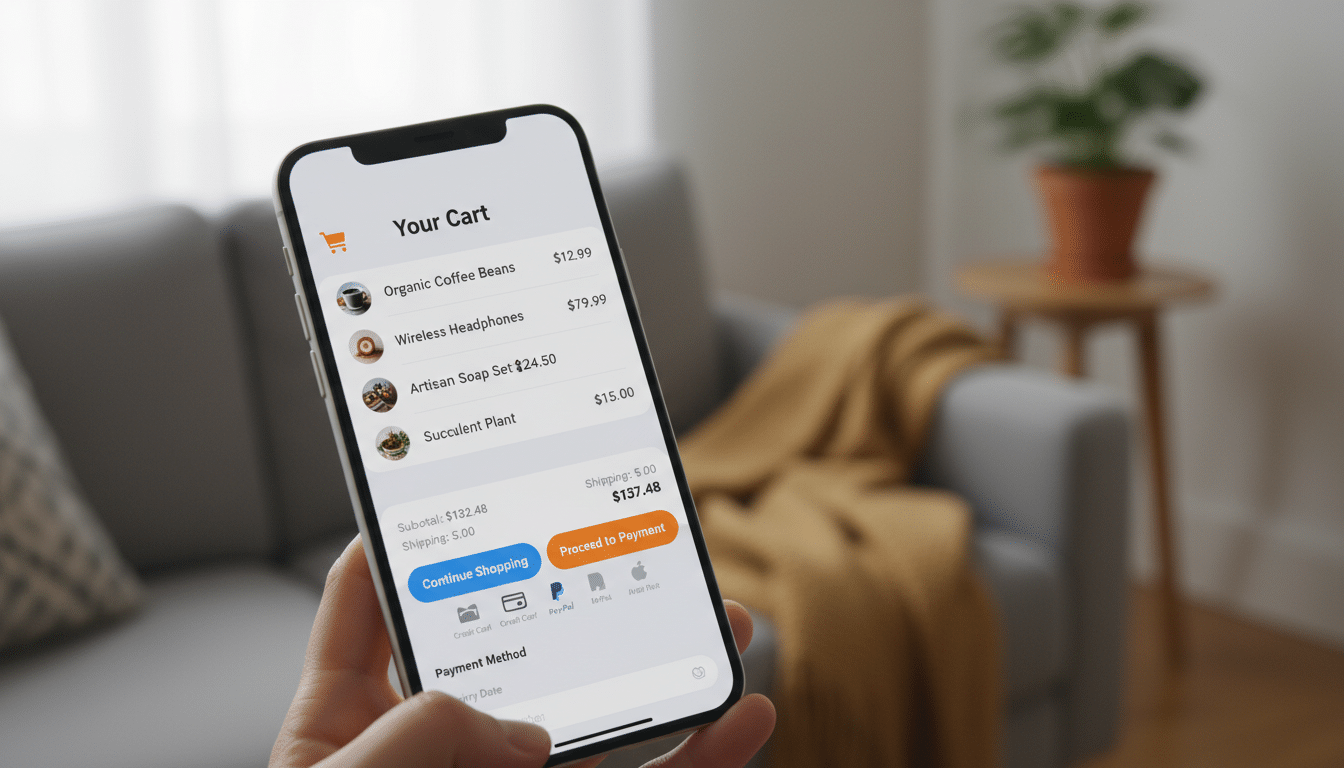
Personalized deals are offers shaped by a shopper’s tastes, past behavior, and moment-to-moment context inside a shopping app. They include customized coupons, product suggestions, time-limited promotions, and bundle offers aimed at items a user actually cares about.
Unlike generic sales, personalized offers use browsing history, purchase records, and in-app signals to surface relevant pieces. This reduces friction, highlights shopping app discounts that matter, and helps users find styles faster.
Anúncios
These ecommerce deals show up in many places: in-app banners, home feed app recommendations, push notifications, emails, and checkout prompts. Major fashion retailers and marketplaces use in-app product recommendations and coupons to nudge discovery and reward repeat buyers.
For shoppers, personalized deals save money and speed up decision-making. They also help shoppers test new pieces with lower risk. For retailers, personalized offers boost average order value, improve conversion, increase retention, and make marketing spend more efficient.
This article explains how personalization works, the types of offers you’ll see, the data and tech behind recommendations, design best practices, privacy concerns, and how to measure success.
Key Takeaways
- Personalized deals tailor offers to individual tastes using app behavior and purchase history.
- They appear across channels: banners, feeds, push, email, and checkout.
- Shoppers gain relevance, convenience, and savings; retailers gain higher AOV and retention.
- Major fashion apps use app recommendations and targeted coupons to drive discovery.
- The article will cover types of offers, tech and data, design tips, privacy, and measurement.
How Personalized Deals Improve the Shopping App Experience
Personalization shapes what a shopper sees and how she shops. It mixes simple business rules with data models. This helps match products, messages, and pricing to one user.
This method creates better app recommendations and smarter ecommerce deals tailored to individual preferences.
What personalization means in mobile commerce
Personalization uses signals like search queries, viewed items, and cart contents to tailor the experience. It also considers size preferences, visit frequency, and user engagement.
Rule-based personalization follows clear if/then rules set by merchandisers. Data-driven personalization uses machine learning to find patterns and predict what a user might like next.
Benefits for shoppers: relevance, convenience, and savings
- Relevance: fewer irrelevant items show up. Shoppers see styles that match past activity and saved preferences.
- Convenience: faster discovery through curated feeds and one-tap offers. This reduces steps from discovery to checkout.
- Savings: targeted coupons, early access deals, and bundles lower costs for items a user likely wants.
Mobile-first examples make this clear: a feed shows similar dresses after viewing one. A size-specific coupon applies at checkout. A push notifies about a saved item with a small discount.
These moments prove how personalized offers and app recommendations reduce friction during shopping.
Benefits for retailers: retention, higher AOV, and better conversion rates
- Retention: personalized content encourages repeat visits and longer sessions by keeping the app relevant.
- Higher average order value: cross-sell bundles and recommended add-ons increase basket size.
- Better conversion rates: contextual deals like cart-specific discounts reduce drop-off and boost purchases.
Industry studies report lifts in conversion and retention when mobile commerce personalization is well executed. Results vary by app and audience.
Expectations should stay realistic: personalization helps but is not a cure-all. Success depends on data quality, segmentation, and execution.
Personalized deals
Apps that tailor offers make shopping feel personal and useful. Personalized deals include simple discounts or crafted experiences like bundles and timed promos.
The goal is clear: show the right ecommerce deals when a shopper is most likely to act.
Types of personalized offers
- Targeted discounts based on category or past buys, such as 10% off outerwear after browsing coats.
- Suggested bundles that pair complementary pieces, like a dress with a matching bag.
- Time-limited deals shown during a short browsing window or after repeated views to create urgency.
- Loyalty and VIP promotions for frequent shoppers to reward repeat engagement.
Behavior-driven deal examples
- Cart abandonment: send a friendly reminder and a small coupon if an item sits in cart for 24–48 hours.
- Repeat purchase incentives: offer a tailored discount for staples that customers repurchase often.
- Browse nudges: show “you looked at this” alerts with a personalized discount or low-stock warning.
- Win-back offers: re-engage inactive users with a targeted promo that invites them back to the app.
Dynamic pricing and customized coupons
Dynamic pricing changes prices based on demand, inventory, user segment, or willingness to pay. Fashion apps use it for flash sales and inventory-driven markdowns in a non-intrusive way.
Customized coupons link promo codes to a user ID or session to stop misuse and measure attribution.
Ethical practice matters. Be transparent about price differences and avoid anything that may seem discriminatory to shoppers.
Clear messaging builds trust and keeps ecommerce deals effective.
Data and technology behind app recommendations and offers
Apps deliver personalized deals by combining simple signals with smart tech.
This short guide explains where data comes from, which models make picks, and how A/B testing ecommerce choices refines what users see.
User data sources
- Browsing signals: product views, search queries, time on page, scroll depth.
- Purchase history: sizes, preferred brands, price sensitivity, return behavior.
- Engagement signals: clicks on push notifications, wishlist adds, social sharing.
- Contextual signals: device type, time of day, session length.
How algorithms power recommendations
Collaborative filtering suggests items people with similar tastes liked.
Content-based filtering matches product features to user preferences.
Hybrid models blend both for better accuracy.
Deep learning models merge images, text, and behavior to predict purchases or the right bundle.
Practical constraints matter on mobile devices.
Latency and data limits force teams to choose between server-side and on-device inference.
Edge computing and lightweight models help with real-time personalization while saving bandwidth.
Predictive goals of machine learning recommendations
- Forecast next purchase and size or color preferences.
- Recommend complementary items for bundles.
- Target coupons to users likely to redeem them.
Role of A/B testing and analytics
A/B testing ecommerce copies, visuals, and offer sizes shows what raises click-through and conversion.
Analytics measures uplift in conversion rate, AOV, retention, and redemption rates.
Teams should iterate: start small, measure impact, and scale winning variations.
Watch for stale data, cold-start users, and over-personalization that narrows discovery.
Designing effective personalized offers for higher engagement
Creating offers that feel made for each shopper starts with clear goals and simple rules.
Mobile-first design, fast images, and bold touch targets set the stage for conversion.
Use app recommendations to guide outfits and looks, not to overwhelm the feed.
Segmentation strategies and audience targeting
Segment by behavior, value, and life cycle to keep messages relevant.
For fashion apps try:
- Behavior-based: recent viewers, cart abandoners, frequent buyers.
- Value-based: high spenders vs. bargain shoppers.
- Life-cycle: new users, active, dormant.
Keep segments actionable and small in number. Match each segment with a clear offer type and testing window.
Personalized messaging, timing, and push notification best practices
Write short, visual messages that focus on the product.
Use CTAs like Try now, Save on this look, or Add to cart.
Test send times but favor evenings and weekends when many browse. Respect recency signals to avoid spamming.
- Limit frequency and personalize headline and preview text.
- Link pushes directly to the product or cart for faster checkout.
- Use push notification best practices to keep opt-outs low.
UX patterns that increase click-through and redemption
Design clear, size-aware offers and show fit suggestions where relevant.
Visual product cards with countdown timers create urgency without pressure.
- One-tap promo application at checkout to reduce friction.
- In-app banners on home feeds and personalized carousels that use app recommendations.
- Minimal form fields and fast-loading pages to cut drop-off.
Measure friction points like load time and extra steps.
Iterate on UX personalized deals until redemption rates improve.
Privacy, security, and regulatory considerations for personalized offers
Personalized deals feel helpful when they respect user boundaries. Apps should make privacy personalized offers clear, short, and easy to manage. This helps shoppers understand what data powers app recommendations and why it matters.
Consent, data minimization, and transparency practices
Prompt for consent with plain-language prompts inside the app. Explain how browsing and purchase signals shape personalized deals. Keep disclosures brief and visible in privacy settings.
Apply data minimization by collecting only attributes needed for personalization, like recent purchases or size preferences. Hash or anonymize identifiers when possible to lower risk.
Compliance with US laws and industry standards (e.g., CCPA considerations)
Offer clear paths for data requests, deletion, and portability. Document processing steps and timelines for teams to honor consumer rights quickly.
Include CCPA considerations in vendor contracts and audit logs. Keep records of consent and opt-outs to show compliance if regulators ask.
Balancing personalization with user trust and opt-out options
Provide separate toggles for targeted ads and app recommendations so users choose their comfort level. Offer anonymous or aggregated personalization for people wanting useful offers with less data sharing.
Avoid invasive signals that feel like surveillance, such as referencing purchases made outside the app. Respectful, limited use of data protects trust and keeps engagement high.
Measuring ROI of personalized deals and ecommerce deals in apps
Tracking the impact of personalized offers starts with a clear metric plan. Brands should split short-term signals from long-term value. This helps judge both immediate wins and program health.
Key metrics to track
Focus on a compact set of KPIs that match business goals.
- Conversion rate: percent of users who redeem personalized deals and complete a purchase.
- Average order value: shows upsell and bundle effects on cart size.
- Retention: repeat purchase rate across cohorts over time.
- Customer lifetime value (LTV): cumulative revenue per cohort to capture long-term ROI.
Start pilots by measuring redemption rate for quick feedback. Then add LTV metrics to evaluate sustainability. Use app recommendations data to link offers with product affinity.
Attribution challenges and practical fixes
Attribution gets messy when users switch devices or see multiple touchpoints. Promo stacking and shared coupons can inflate results.
- Use unique coupon codes or tokenized coupons to assign conversions reliably.
- Apply cohort analysis to separate promo-driven buyers from organic buyers.
- Adopt multi-touch attribution models to weight channels that influenced the sale.
Watch for coupon misuse that skews conversion rate and average order value. Per-user limits and anomaly detection reduce fraud and loopholes effectively.
Case studies and benchmarks
Retailers often see modest single-digit lifts in conversion from simple personalization. Mature programs that combine app recommendations and tailored bundles report larger gains.
- Run A/B tests to create internal benchmarks before scaling.
- Compare short-term KPIs like redemption and conversion rate with long-term metrics such as retention and LTV.
- Document cohort performance to understand how ecommerce deals affect behavior over months.
Practical next steps: measure redemption first, run small pilots with tracked codes, then expand tactics that raise average order value and retention. Keep experiments tight and repeatable to build reliable ROI from personalized deals in your app.
Conclusion
Personalized deals and app recommendations make shopping apps useful for both shoppers and retailers. They help users find relevant items faster. When based on clear data and good UX, they can boost order value, conversions, and retention.
Follow a short checklist. Use consented data sources and start with simple personalized offers and segments. Run A/B tests for messaging and timing.
Track short- and long-term KPIs while guarding against fraud. Give users control and transparency. These steps keep ecommerce deals effective and respectful.
Begin with a small pilot. Measure results, make changes, and scale what works. Avoid chasing one-size-fits-all solutions.
A careful approach to personalized deals will make app experiences smarter and more valuable for everyone. Assess your current shopping app personalization and run a focused test this month.
Content created with the help of Artificial Intelligence.